《GHOSTLY, GODLY/人間》
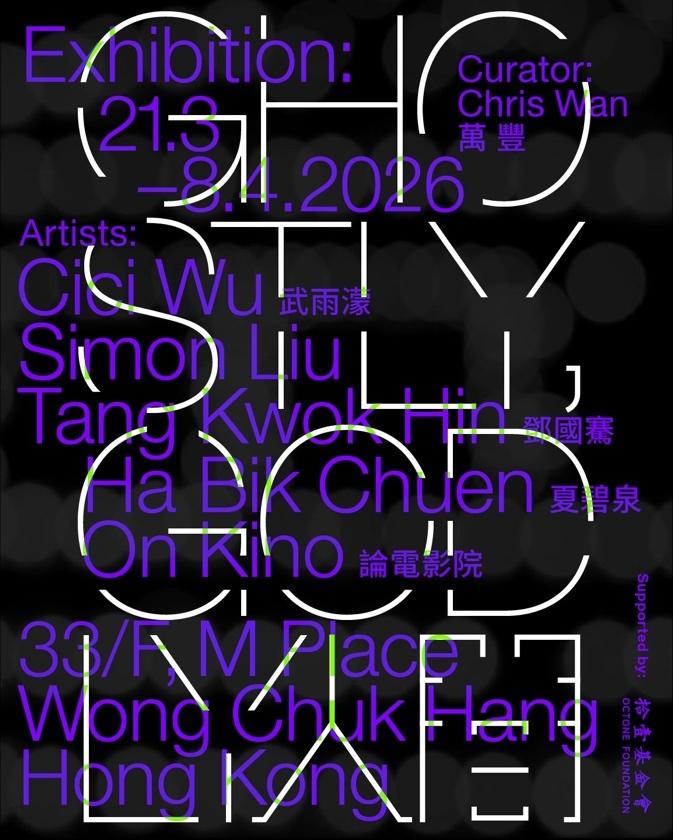
2026/3/21– 4/8
11am – 7pm
33/F, M Place, Wong Chuk Hang, Hong Kong
33樓, 黃竹坑54號, 香港
Artists:Simon Liu @cyi_liu ,武雨濛(Cici Wu),鄧國騫(Tang Kwok Hin @tangkwokhin),夏碧泉(Ha Bik Chuen),論電影院(On Kino @on_kino_on_analog)
Curated by:萬豐(Chris Wan @chriswanfeng)
Supported by:拾壹基金會(Octone Foundation @octone.foundation)
KV designed by: YJ @y.j.g.d
Between Hauntology and Modernity :
GHOSTLY, GODLY / 人間 Opens in Wong Chuk Hang
Artistic Practices Bringing Together History and the Present
This exhibition is a curatorial experiment that breaks away from the framework of traditional art institutions, emphasizing the very curatorial language and a strong sense of locality. Curated by Chris Wan and made possible through the full support of Octone Foundation, the exhibition departs from conventional commission-based and theme-led exhibition models. It has developed through long-term research and sustained dialogue with the participating artists, taking shape as a project rooted in the specific conditions of Hong Kong’s artistic ecology.
The exhibition brings together works by Cici Wu, Simon Liu, Tang Kwok Hin, Ha Bik Chuen, and On Kino. Spanning film, installation, painting, archival materials, and printed matter, it stages a conversation across generations and artistic positions, tracing a narrative of modernity as it has been lived, remembered, and reimagined in Hong Kong.
Main Events:
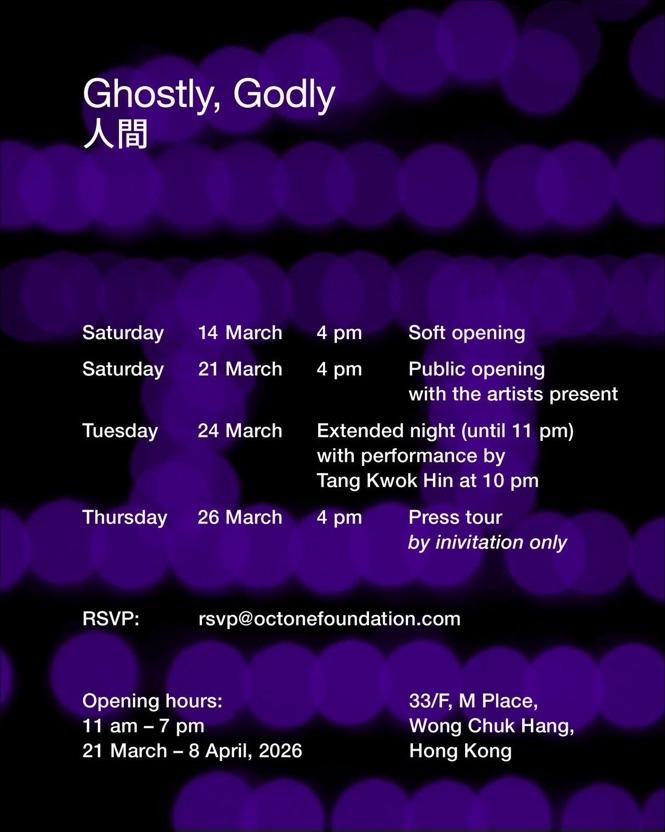
Saturday, March 14, 4pm
Soft Opening
Saturday, March 21, 4pm
Public Opening with the artists present
Tuesday, March 24
Extended night (until 11pm)
“Night Wanderings” — Live Performance by Tang Kwok Hin
At 10:30 PM on March 24, Tang Kwok Hin will begin at the exhibition site of GHOSTLY, GODLY / 人間 on the 33rd floor of M Place, Wong Chuk Hang. Incorporating his ongoing experimental project Habitus, he transforms collected vernacular objects and elements of folk culture into an interactive performative installation, inviting audience participation as the event departs from the exhibition space, moves through the streets, and “wanders in spirit” toward the nighttime performance venue at Current Plans.
Thursday, March 26, 4pm
Press Tour (Invitation Only)
RSVP required for all events: rsvp@octonefoundation.com
From Hauntology to the Human Realm
Taking hauntology as a point of departure, GHOSTLY, GODLY / 人間 considers how unresolved histories continue to shape lived reality. Rather than treating folk belief as spectacle or reducing it to an orientalist image of spirituality, the exhibition approaches hauntology as a method of attending to the cultural traces that persist from past into present. Often unspoken yet deeply operative, these traces continue to inform social perception, collective memory, and everyday life. From this perspective, Hong Kong emerges as a specific cultural field through which broader questions of locality, modernity, and historical consciousness in East Asia may be considered.
In Hong Kong, belief systems including Buddhism and Daoism are not merely matters of private faith, but are embedded in the city’s social, cultural, and political life, shaping the ways individuals relate to the world around them. The English title, GHOSTLY, GODLY, invokes forms of perception that are intangible yet pervasive in
their effects, while the Chinese title, 人間 (Human Realm), draws on the Buddhist conception of the mortal world as one in which suffering and joy, attachment and contingency, coexist.
From this vantage point, Hong Kong appears not as a singular identity but as a layered and unstable field shaped by historical fragments, contemporary shadows, and projected futures. The exhibition attends to the ways grassroots culture and cultural politics remain entangled across time, moving between what is visible and what remains latent, and taking material form in the lived conditions of the present.
Artistic Practices: Micro-Narratives of Hong Kong
The five participating artists approach the exhibition’s central questions through distinct formal languages and artistic methods. Their works do not simply coexist within the same space; rather, they enter into relation across medium, generation, and sensibility, assembling a layered and at times dissonant portrait of Hong Kong.
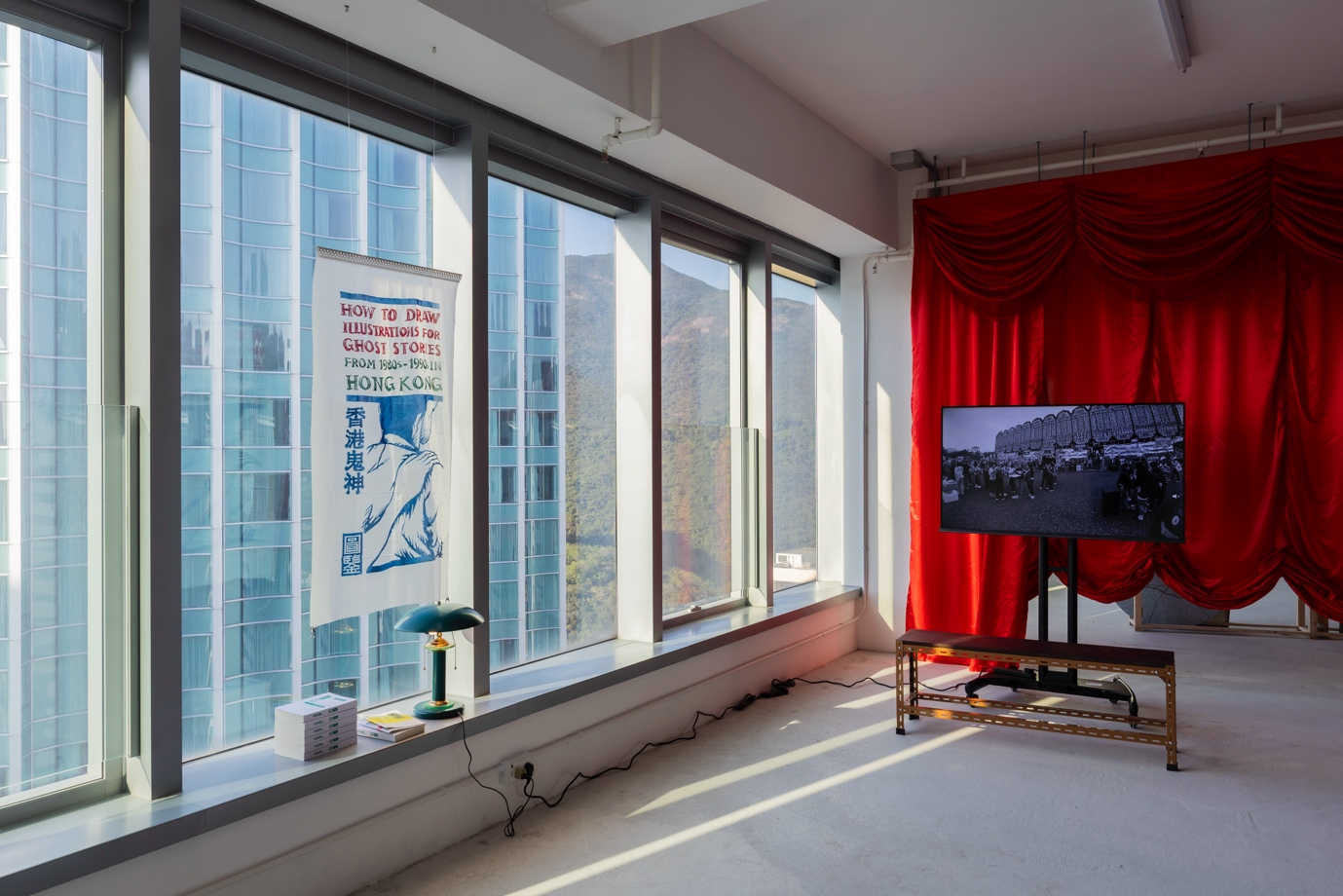
Simon Liu presents a new film installation that extends his ongoing interrogation of documentary form. Within the gallery, Liu constructs an immersive moving-image environment in which rapid, disjunctive, and dreamlike urban sequences unfold in darkness, setting up a charged contrast with the expansive landscape visible beyond the site. Working across documentary instability, subjective perception, and urban memory, Liu’s installation reorients the viewer’s relation to Hong Kong, bringing into view the unsettled psychic and historical dimensions that lie beneath the city’s metropolitan surface.
Presenting new work in Hong Kong for the first time, Cici Wu extends cinematic language into sculptural and material form. Working with lanterns, ink, paper effigies, and other vernacular elements, her installation reflects on the disappearance of the book as historical object and on the return of ghostly presence through matter, image, and ritual residue. Historical forms are neither preserved intact nor nostalgically recovered; instead, they are transformed into fragile signs through which contemporary life remains haunted by its own material past.
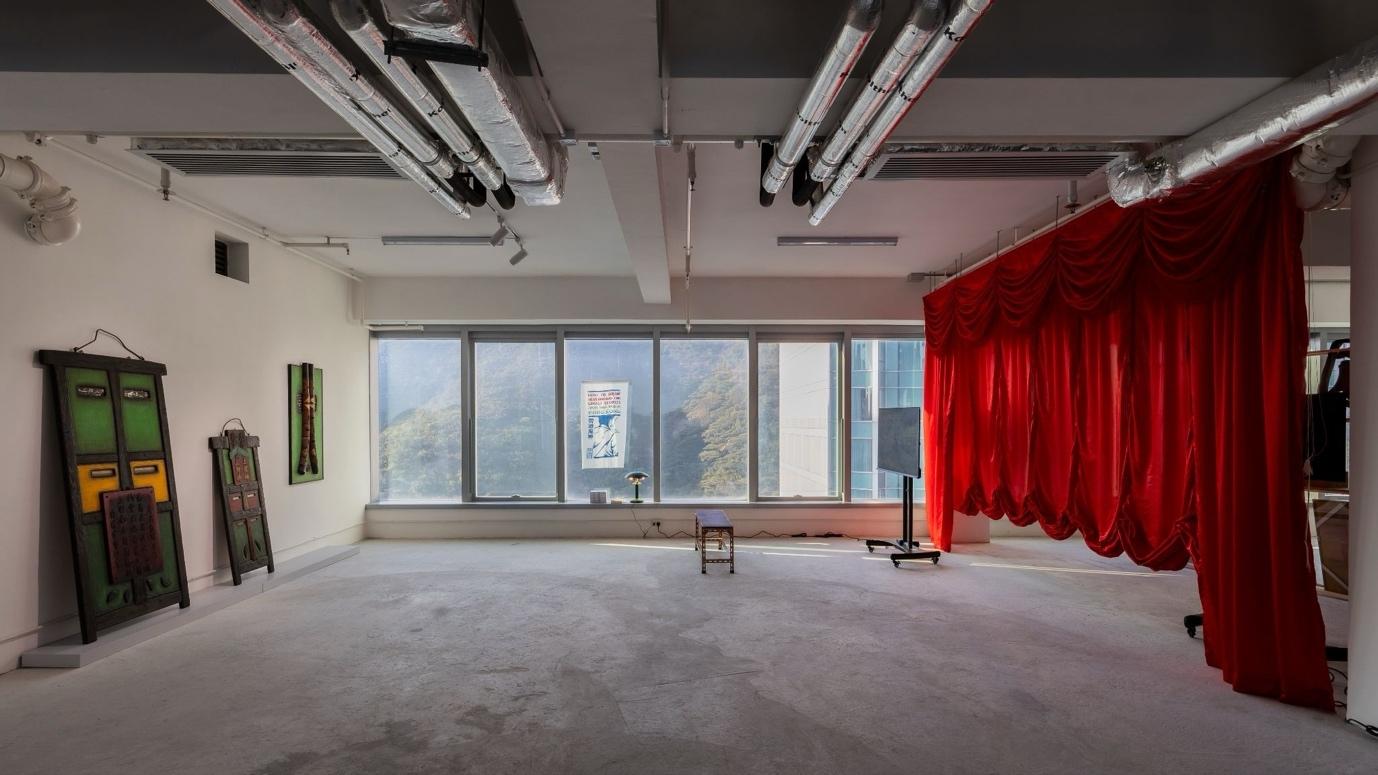
Tang Kwok Hin’s practice is grounded in auto-ethnographic inquiry and sustained attention to indigenous and vernacular experience. His video work Good Fortune (2026) documents the decennial Kam Tin Da Jiu Festival, placing inherited clan structures and ritual practices alongside present-day social life. In doing so, the work reveals forms of social and cultural continuity that persist beneath more familiar images and assumptions of Hong Kong. His installation Bad Habits (2026) extends this inquiry by turning the gallery into a hybrid space of display, labour, and ongoing activity. Bringing together fragments accumulated across two decades of practice, Tang reactivates the exhibition as a site of encounter, performance, and public exchange.
This inquiry will further unfold in 神 遊 夜 / Night Wanderings (2026), a live performance by Tang Kwok Hin taking place on 24 March at 10:30 pm. Incorporating his ongoing experimental project Habitus, the work transforms vernacular objects and elements of folk culture into an interactive performative environment, inviting audiences to move with the artist from the exhibition and through the surrounding streets toward Current Plans space. The Current Plans night programme is co-hosted by Octone Foundation.
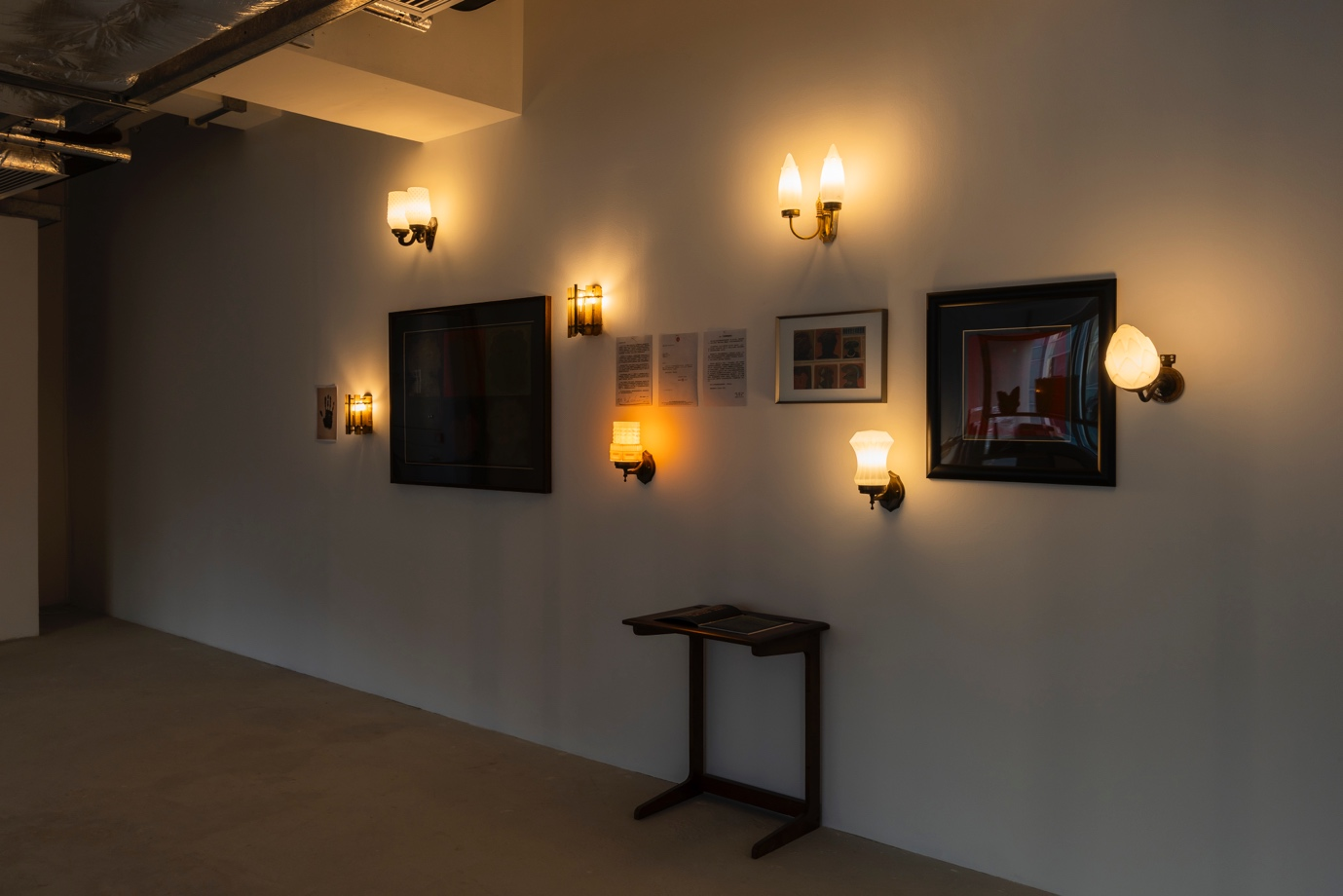
A pivotal figure in Hong Kong’s cultural history, Ha Bik Chuen is presented here both as artist and as an active participant in the city’s art ecology. The exhibition includes works from his Dragon series, in which deity plaques and modernist abstraction converge within woodblock compositions, alongside paper-casting prints from Sentient Beings and archival materials from 1997. Together, these works and documents register the entanglement of personal memory, artistic production, and historical transformation.
On Kino approaches the exhibition through archival reactivation and publishing. For GHOSTLY, GODLY / 人間, the collective reorganises and republishes ghost-story magazines once circulated through Hong Kong newsstands during the 1980s and 1990s under the title How to Draw Illustrations for Ghost Stories From 1980s–1990s in Hong Kong. Rarely addressed within official cultural histories, these publications offer an alternative record of urban imagination, popular anxiety, and vernacular visual culture. Through editing, republication, and display, they become another point of entry into Hong Kong’s cultural subconscious. Installed within a non-white-cube environment at the top of an industrial building in Wong Chuk Hang, the exhibition takes shape through the interaction between site and work. The urban landscape visible beyond the windows meets moving images, archives, sculptural forms, and performative gestures within the space, allowing history to appear not as distant subject matter but as a near and tangible condition of experience.
Locality and Modernity: Reconsidering Hong Kong Through a Micro-Ecology
Composed through micro-narratives, the exhibition reflects a distinct ecology within Hong Kong’s contemporary art landscape. The hauntological condition explored by Chris Wan is not treated as a consumable motif or spectacle, but as a structure of feeling shaped by local cultural life and political experience. For artists living and working in Hong Kong over time, the “ghostly” and the “godly” do not constitute a distant field of reference; rather, they belong to the ordinary textures of daily life. By returning to the city’s artistic ecology through material, image, ritual, and memory, the exhibition offers another perspective on Hong Kong’s art history and on the contemporary conditions through which “Hong Kong-ness” may be understood.
Equally central to the exhibition is the working method through which it has taken shape. Developed through sustained dialogue between curator and artists, the project does not proceed from institutional commission or predetermined format. Instead, it has emerged through revision, intuition, and self-organised processes grounded in local conditions. Cross-generational and cross-media practices are brought into relation not through curatorial imposition alone, but through affinities that have developed over time, turning the exhibition into a dynamic field of interaction.
From the vantage point of the 33rd floor, Hong Kong appears at once distant, unstable, and intensely present. Through fragments ranging from domestic interiors to street shadows, the exhibition brings into focus a lived and contingent human realm shaped by historical pressure, cultural residue, and everyday persistence.
Institutional Vision: Supporting Local Artistic Production and Cultural Connection
The exhibition is made possible through the initiative of the Octone Foundation. This involvement allows the project to develop beyond the frameworks of galleries, collectors, and market systems, providing relatively independent conditions for curatorial research and artistic experimentation while helping cultivate fertile ground for discovering independent artists. Rather than serving as a display of institutional resources, the foundation approaches the project as a participant in the shaping of Hong Kong’s artistic ecology. Its engagement aims to create broader possibilities for artists and curatorial practices that remain outside established systems.
This sustained commitment to in-depth research and process-oriented artistic practice also extends to a newly initiated curatorial project by the foundation — Bloody Worm: Nomadic Bodies, Conscious Experience, and Embodiment Practice. The project is jointly initiated by independent curator Yifei Tang and the foundation, inviting artists Bo Choy, Cici Wu, and Chan Ting to undertake a year-long period of in-depth personal exploration. The initiative establishes an academic framework comprising internal meetings, fieldwork, research support, and process archiving, while providing a launch fund and flexible funding mechanisms. It even allows the possibility for artistic exploration to “fail,” aiming to rebuild intimate understanding across cultural and geographical differences within the gaps of existing systems.
From the reconstruction of modernity in GHOSTLY, GODLY/人間, to the kinship-oriented observation of migrating individual experiences in Bloody Worm, the Octone Foundation continues to provide a paradigm of support for the Hong Kong and Asian art ecosystems that is defined by both academic depth and humanistic warmth. Amidst the clamor of the March Art Week, this curatorial experiment transcends the scope of a short-term exhibition, transforming into an ongoing cultural dialogue. As curator Chris Wan concludes: “Every element in this exhibition eventually becomes indistinguishable from the next; together, they compose a specific time and space—a ghostly, godly human realm.”
About Octone Foundation
Octone Foundation was established in Hong Kong in 2022, and is dedicated to promoting social mobility and the long-term development of a harmonious society through the power of art and culture. Guided by a commitment to public service and social responsibility, the Foundation supports education and charitable initiatives, with a particular focus on low-income communities, arts access for children and adolescents, and practical support for young artists and emerging creative and cultural projects. With the support of its Chairman, He Fan, the Foundation has sponsored exhibitions and programs at institutions including Tai Kwun Contemporary in Hong Kong (for Stay Connected: Art and China since 2008), a scholars’ guided tour for The Great Disguise at the Rockbund Art Museum in Shanghai, and exhibitions and programs at M+ in Hong Kong, helping create conditions for artistic expression and ensuring that cultural initiatives benefit the broader public.
Chris Wan is Head of Gallery and Exhibitions at Asia Society Hong Kong Center. Prior to joining ASHK, he worked as an independent curator and art critic in Hong Kong’s contemporary art scene for over a decade. His curatorial projects have spanned institutions and regions, with recent presentations in mainland China, Hong Kong, Singapore, Japan, Abu Dhabi, and Paris. He approaches art through structural and systemic lenses, focusing on themes of modernity, mobility, and locality, with Hong Kong serving as a central site for his ongoing research and critical engagement. In addition to curating, Chris founded the non-profit Chinese-language art writing platform Daoju (島聚) and is a regular contributor to publications such as Artforum, ArtReview, and Ocula.
CICI WU (b. 1989, Beijing) is an artist currently based in New York. Reducing filmmaking to its most humble and elemental components, she creates drawings, objects, videos, and installations which extend the imaginative and structural premises of cinematic language across a wide range of media. She has exhibited at major art institutions and events including the 36th Biennial de São Paulo (2025), Asian Art Biennale, Taiwan (2024), the 11th Seoul Mediacity Biennale, South Korea (2021), and Yokohama Triennial, Japan (2020). Her work has been the subject of solo exhibitions at the Rockbund Art Museum, Shanghai (2025), Scheusal, Berlin (2024), Empty Gallery, Hong Kong (2023, 2019), Hordaland Kunstsenter, Norway (2023); 47 Canal, New York (2021, 2018); and has participated in group exhibitions at Palais de Tokyo, Paris (2025), the Drawing Center, New York (2023, 2020), CAPC Musée d’ art Contemporain de Bordeaux (2022), Para Site, Hong Kong (2020, 2018), Artists Space, New York )2020), among others.
SIMON LIU (b. 1987, Hong Kong; lives and works in New York) is an artist filmmaker whose work shifts between material abstraction, speculative history, and subversion of documentary cinema practices via short films, multi-channel video installations, mixed media prints, 16mm expanded cinema projections, and audiovisual performances. His work has been exhibited at institutions including the Whitney Biennial 2024, MoMA, MOCA LA, The Shed, PICA, Tai Kwun Contemporary, Museum of the Moving Image, Everson Museum, Moderna Museet, Carpenter Center, and the M+ Museum. His films have screened at festivals globally including the Toronto, New York, Berlin, Rotterdam, London, Vienna, Edinburgh, Jeonju, and Hong Kong International Film Festivals alongside the Sundance Film Festival, New Directors/New Films, CPH:DOX, and the Media City Film Festival. His work is in the Permanent Collections of the Museum of Modern Art, M+ Museum, and Centro Pecci. Profiles of his practice have featured in Hyperallergic, Art in America, BOMB Magazine, South China Morning Post, Cinemascope, and the New York Times. He is an educator at the Cooper Union School of Art and Pratt Institute.
TANG KWOK HIN (b. 1983, Hong Kong; lives and works in Hong Kong) is a multi-media artist whose work and ideas are deeply rooted in introspection. Somewhat autoethnographic, Tang Kwok Hin explores his indigenous background and life experiences in his walled village, to evince a sense of place and self within the work. Tang's practice intertwines with his personal journey and the complexity of his surroundings, where he grapples with the nuances of the extreme present. Through various mediums like objects, installations, moving images, performances, and collages, he delves into universal emotions, thoughts, and essences amidst chaos, drawing on his own lived experiences. His works touch upon themes of growth, inheritance, locality, freedom, urbanization, consumption, nature, politics, norms, and existence, reflecting a profound engagement with the intricacies of contemporary life.
HA BIK CHUEN (1925–2009) was a Hong Kong-based artist who made prints, sculptures, collage books, and was also a prolific photographer. He publicly showed prints and sculptures, but kept most of his photographs and all his collage books private. Born in Guangdong, he moved to Hong Kong via Macau in 1958. After closing his family-run paper flower factory in the 1960s, Ha became an artist and an active participant of the Hong Kong art scene by documenting exhibitions and events through photography. Ha’s posthumous legacy as an artist who did not receive any academic training includes a vast personal collection of visual materials that form a crucial part of Hong Kong’s cultural and art history. These materials include photographs he took of over 2,500 exhibitions that he attended in and out of the city. Ha and his materials have been featured in exhibitions as Shanghai Biennale (2016), Singapore Biennale (2019), and ‘Portals, Stories, and Other Journeys’ (2021) at Tai Kwun Contemporary. Ha’s archive has since become one of the key resources of writing Hong Kong art history.
ON KINO was founded in Guangzhou in 2017 by Qin Dao (lives and works in Guangzhou), originating from a 16mm vampire film he produced in 2016. To screen the vampire film, he established a small cinema: On Kino. Later, On Kino evolved into an entity combining an archive, a cinema, and a publishing house. Based on archival research, On Kino present themed film programs, curate diverse exhibitions, and produce publications and films.
For media inquiries and group visit reservations, please contact: rsvp@octonefoundation.com
View All Works: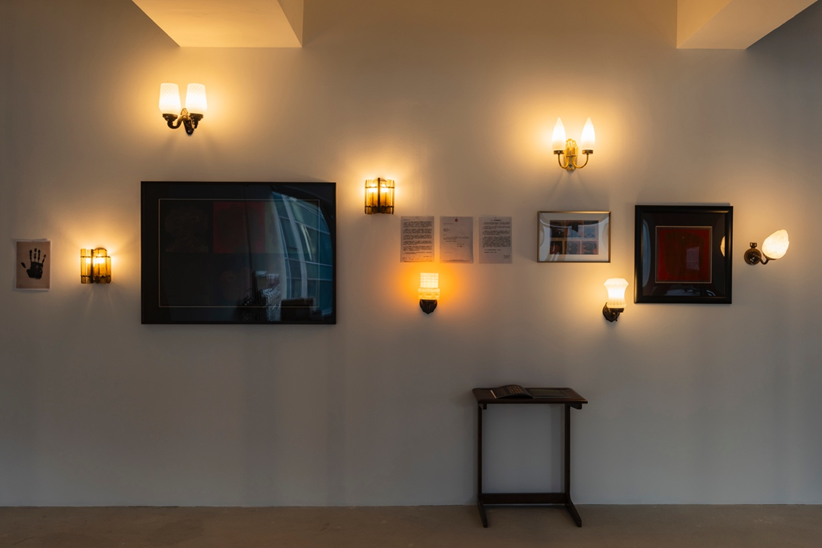
從左到右 From left to right:
眾生相
Sentient Beings
夏碧泉Ha Bik Chuen
1997
鑄紙版畫
Paper casting print
眾生相展覽相關檔案及藝術家書信檔案
Archives Related to the Sentient Beings Exhibition and the Artist's Correspondence
1997-2001
佛有緣
Faith in Buddha (ed.AP)
夏碧泉Ha Bik Chuen
1997
鑄紙版畫
Paper casting print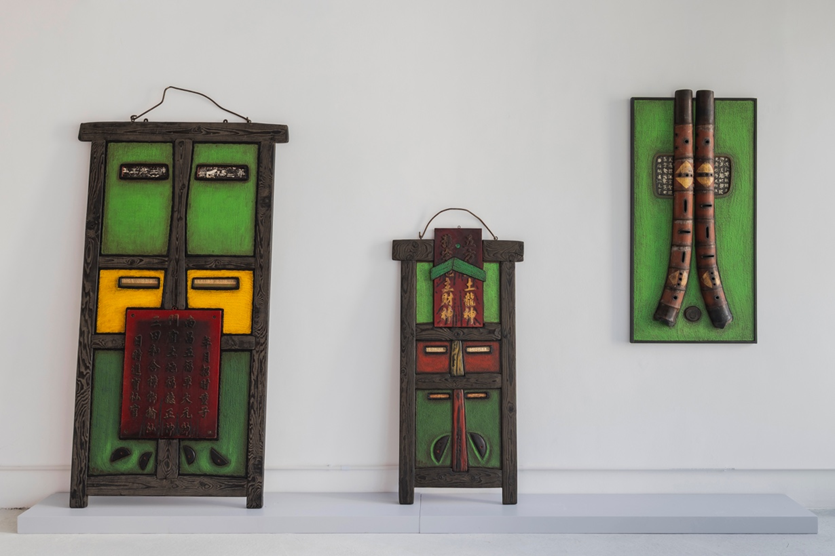
從左到右 From left to right:
龍的迷惑
Dragon Curio
夏碧泉Ha Bik Chuen
1998
綜合媒材面板
Mixed media panel
龍的奧秘
Dragon Enigma
夏碧泉Ha Bik Chuen
1998
綜合媒材面板
Mixed media panel
龍的韻律
Dragon Harmony
夏碧泉Ha Bik Chuen
1998
綜合媒材面板
Mixed media panel
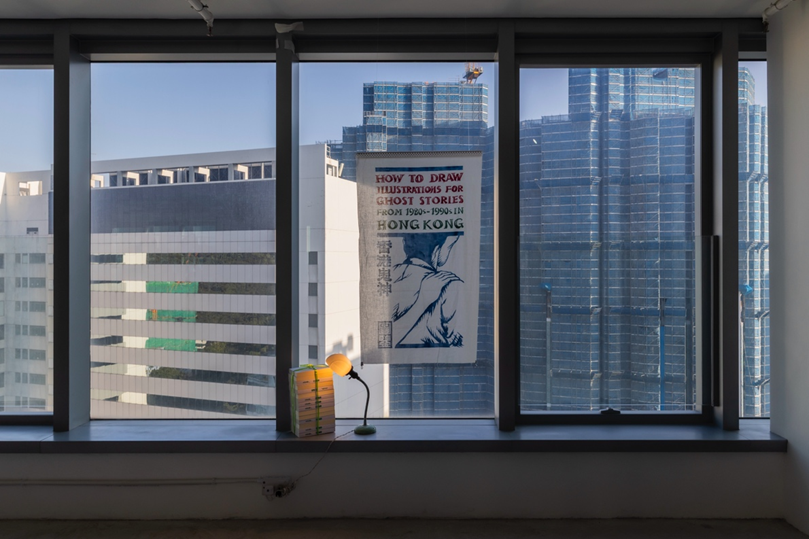
香港鬼神
How To Draw Illustrations For Ghost Stories From 1980s-1990s in Hong Kong
論電影院 On Kino
2026
書及木刻海報
Books and Woodcut Print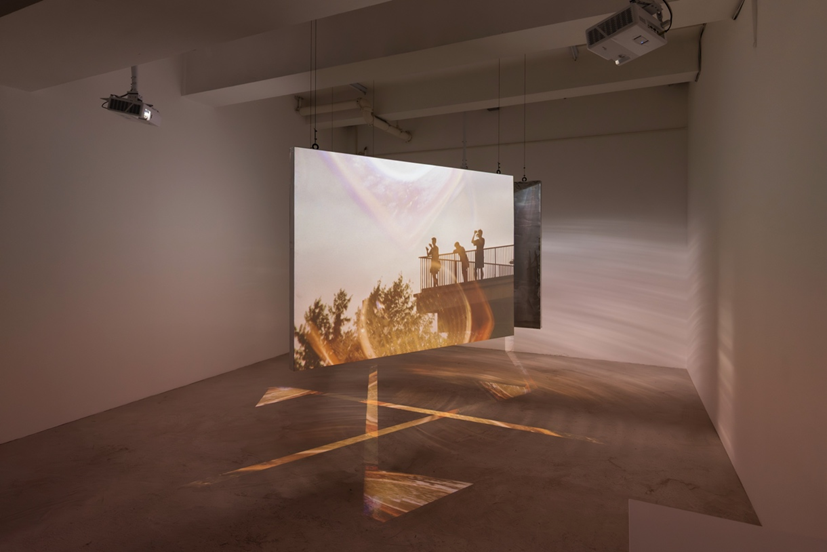
Splits in Two
Simon Liu
2026
Three Channel Video
12 min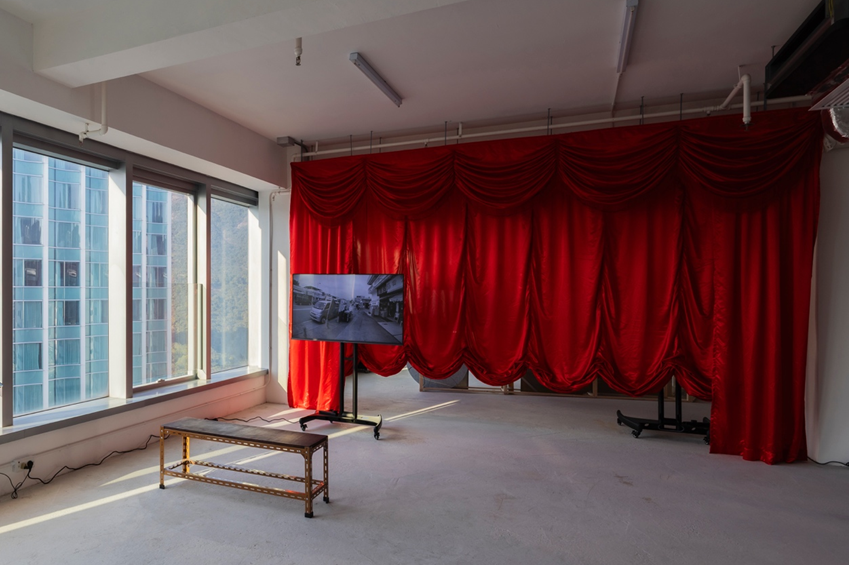
鴻運
Good Fortune
鄧國騫 Tang Kwok Hin
2026
雙頻道錄像,窗簾,燈泡
Two-channel video, curtains, light bulbs
25m51s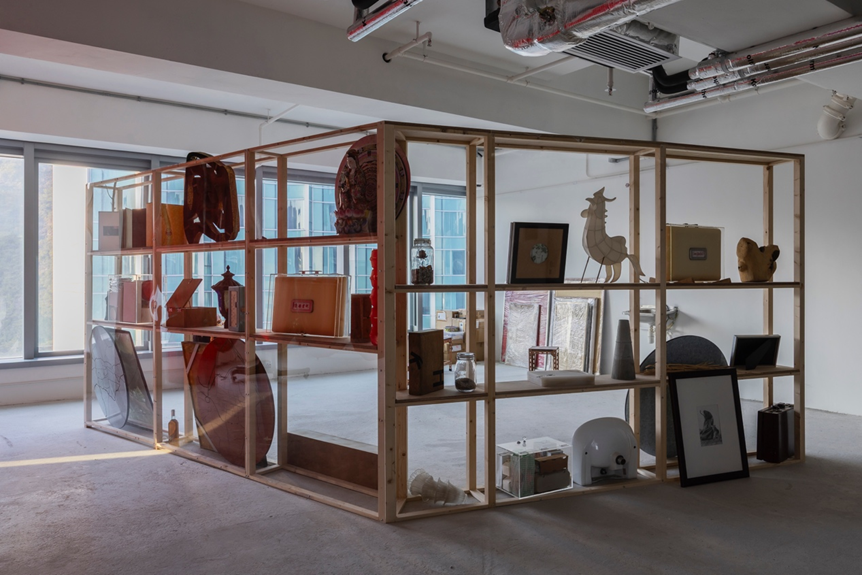
習氣
Bad Habits
鄧國騫 Tang Kwok Hin
2026
On-site performance, mixed media
現場表演,混合媒介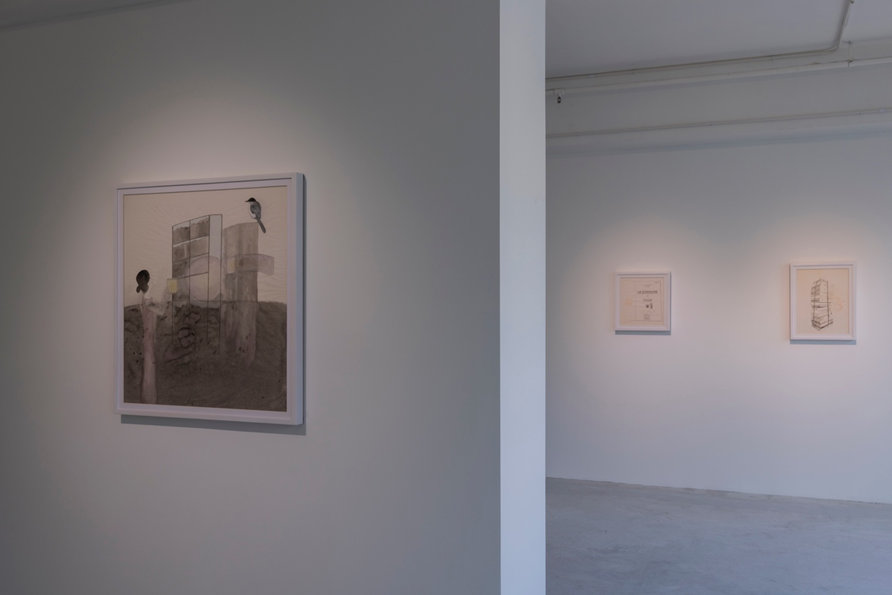
從左到右 From left to right:
《書之靈魂(相遇)》
The Soul of Books (Encounter)
武雨濛 Cici Wu
2025
紙上水墨和礦物顏料
Ink and mineral pigment on paper
89 × 81cm
由上海外灘美術館委任創作
Commissioned by the Rockbund Art Museum, Shanghai
《書之靈魂06》
The Soul of Books 06
武雨濛 Cici Wu
2025
紙上水墨、剪紙、布和線
Ink on paper, paper cut, fabric, and thread
39 × 34 cm
由上海外灘美術館委任創作
Commissioned by the Rockbund Art Museum, Shanghai
《書之靈魂08》
The Soul of Books 08
武雨濛 Cici Wu
2025
紙上水墨、剪紙、布和線
Ink on paper, paper cut, fabric, and thread
49 × 36 cm
由上海外灘美術館委任創作
Commissioned by the Rockbund Art Museum, Shanghai